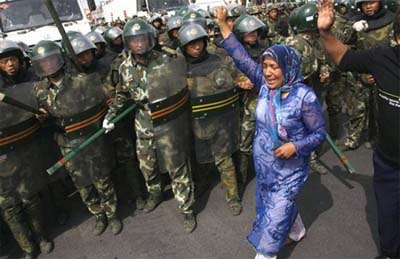
The US Commission on International Religious Freedom recently designated China a “country of particular concern” due to “systematic, ongoing, and egregious violations of religious freedom”. Amnesty International has also been warning for some time that the human rights situation in Xinjiang has grown worse since July 2009. This week saw Andrea Evans at Foreign Policy bring the world’s attention to the arrests of more “religious extremists” in Xinjiang and severe restrictions on fasting for Ramadan. The growth of religious repression in Xinjiang has been fairly evident to those paying attention. Official signs restricting prayersand beards in hospitals is guaranteed to incite “the Uyghur people to resist even further”, in the words of Dilxat Raxit, spokesman for the World Uyghur Congress.
International media should be applauded for providing the world with a reasonably good coverage of the events of the last week. Al Jazeera quoted the Zonglang township government in Kashgar district, stating that it is “forbidden for Communist Party cadres, civil officials (including those who are retired) and students to participate in Ramadan activities” and that leaders should provide “gifts” of food to ensure they do not fast! The Financial Times astutely brought readers’ attention to the fact that fasting for Hui Muslims in other parts of China is permitted. This helps us see the inflation of the idea of “illegal religious activities” in Xinjiang where repression of Islam is justified as a response to “terrorism”. The only thing missing from this coverage has been to tell the world that these restrictions are nothing new. For some time, it has been de facto illegal for any public servant or anyone under 18 in Xinjiang to visit the mosque or participate in any religious activities. What may be new is that local government are explicitly explaining this on their websites, which suggests increasing confidence that religious practice can be directed by the state.
The BBC and the Guardian ran with the story of the conviction of 20 Uyghurs on terrorist charges. Both quote the World Uyghur Congress, while the Guardian at least points to the restrictions on religious clothing and beards emerging across Xinjiang. However, more cynicism is needed as the world’s media seem unwilling to point to the elephant in the room, which is that these are secret trials in a region with no clear evidence of rule of law. Official explanation of convictions remains typically unusual. The Washington Post and AFP point out these crimes were related to the use of “moveable hard drives” and “mobile phones” to “urge crimes of separatism, religious extremism, and terrorism”. Dilxat, quoted again, claims that China is handing out heavy sentences to Uyghurs “who use the internet to access information that is not controlled by the authorities and who are expressing opposing political views”. We would need more information from official channels to refute these claims as “removable hard drives” are not particularly terrifying.
Chinese officials then used the Global Times to say that “Xinjiang denies suppressing Islam”. This begins with an attack on US “double-standard” to assess China’s “efforts in fighting terrorism”, which offers nothing to address the concerns of Uyghurs. The article then commented on the blatant restrictions on observing Ramadan by quoting a random primary schoolteacher. The teacher claims parents all gave consent for their children to avoid fasting. She then went on to say that crime is committed under the banner of “religious freedom” and that it was important to make sure children aren’t misled by terrorists during Ramadan. Perhaps if officials said things about Islam that weren’t related to terrorism, Uyghurs may feel more secure. The World Uyghur Congress released a statement lamenting that the government ignores the “long-standing history and contribution” of Islam to China and that the authorities “opt to repress all aspects of Uyghur religious heritage, culture, and language, propagating ethnic tensions that need not exist”. Repression is making Uyghurs feel less secure and this will only exacerbate tensions and provoke violence if they have no legitimate means to express themselves. We fully recommend the following article by Sean Roberts of the George Washington University, which argues terrorism in Xinjiang is a “self-fulfilling prophecy” waiting to happen with the growth of repression.

